
Key Takeaways
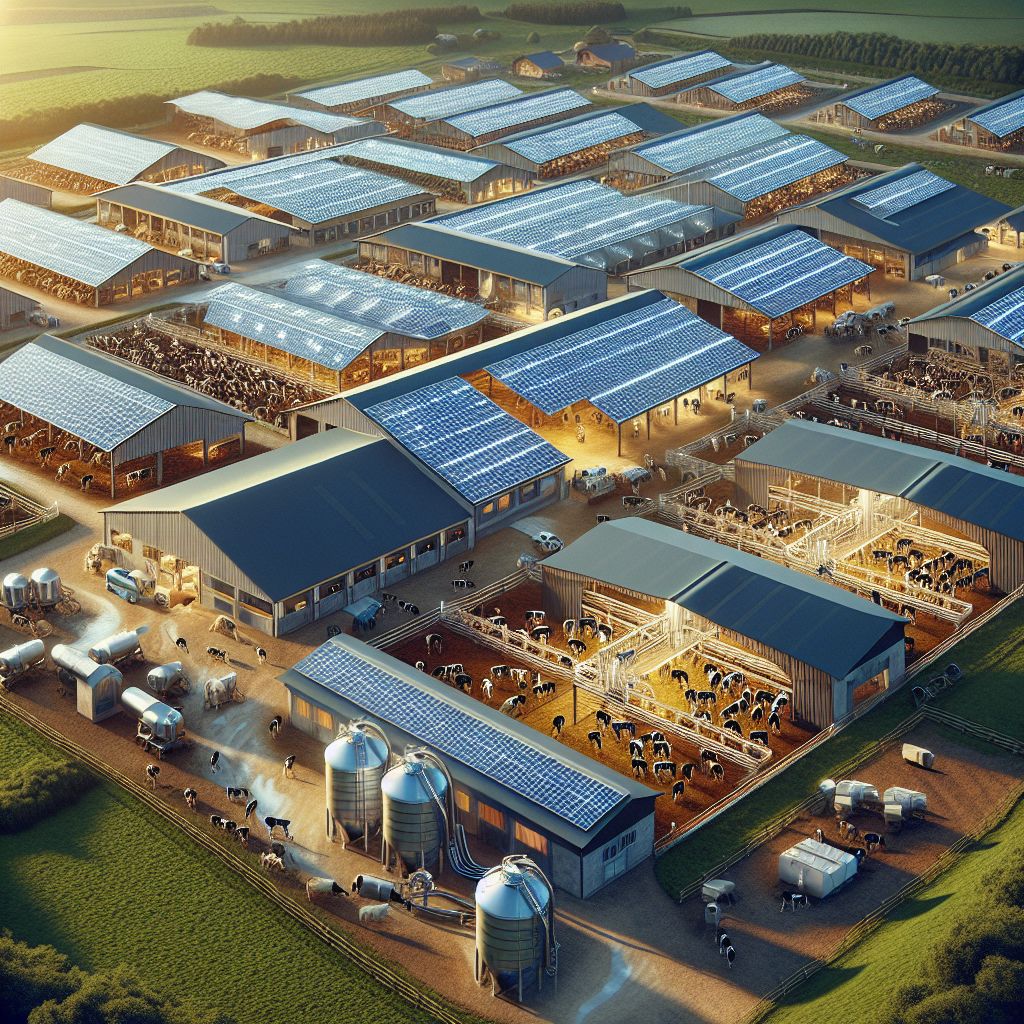
- Solar panels can reduce livestock farm energy costs by up to 70%, with payback periods typically ranging from 5-8 years depending on system size and available incentives.
- Beyond electricity generation, solar installations provide valuable shade for animals, reducing heat stress and potentially increasing milk production by up to 10% in dairy operations.
- Agrivoltaics—the practice of integrating solar energy with agriculture—can increase land-use efficiency by up to 70% while maintaining or improving livestock grazing conditions.
- USDA REAP grants can cover up to 25% of solar project costs for qualifying livestock operations, significantly improving ROI timelines.
- Solar-powered water pumping systems ensure reliable water access for livestock even in remote pastures, improving animal welfare while eliminating fuel costs.
Energy costs can quickly eat into a livestock farmer’s bottom line. From powering ventilation systems and water pumps to lighting barns and operating milking equipment, the electricity demands of modern animal operations are substantial and growing. Solar power offers a practical solution that addresses both economic and environmental challenges facing today’s livestock producers.
Livestock farming requires consistent, reliable energy that traditional grid connections can’t always guarantee, especially in rural areas. With solar panels, farmers can take control of their energy production, stabilize costs, and improve operational resilience. LightsourceBP’s comprehensive solutions help livestock farmers reduce operational expenses while creating more sustainable farming practices that benefit both animals and the environment.
How Solar Panels Cut Energy Costs for Livestock Operations
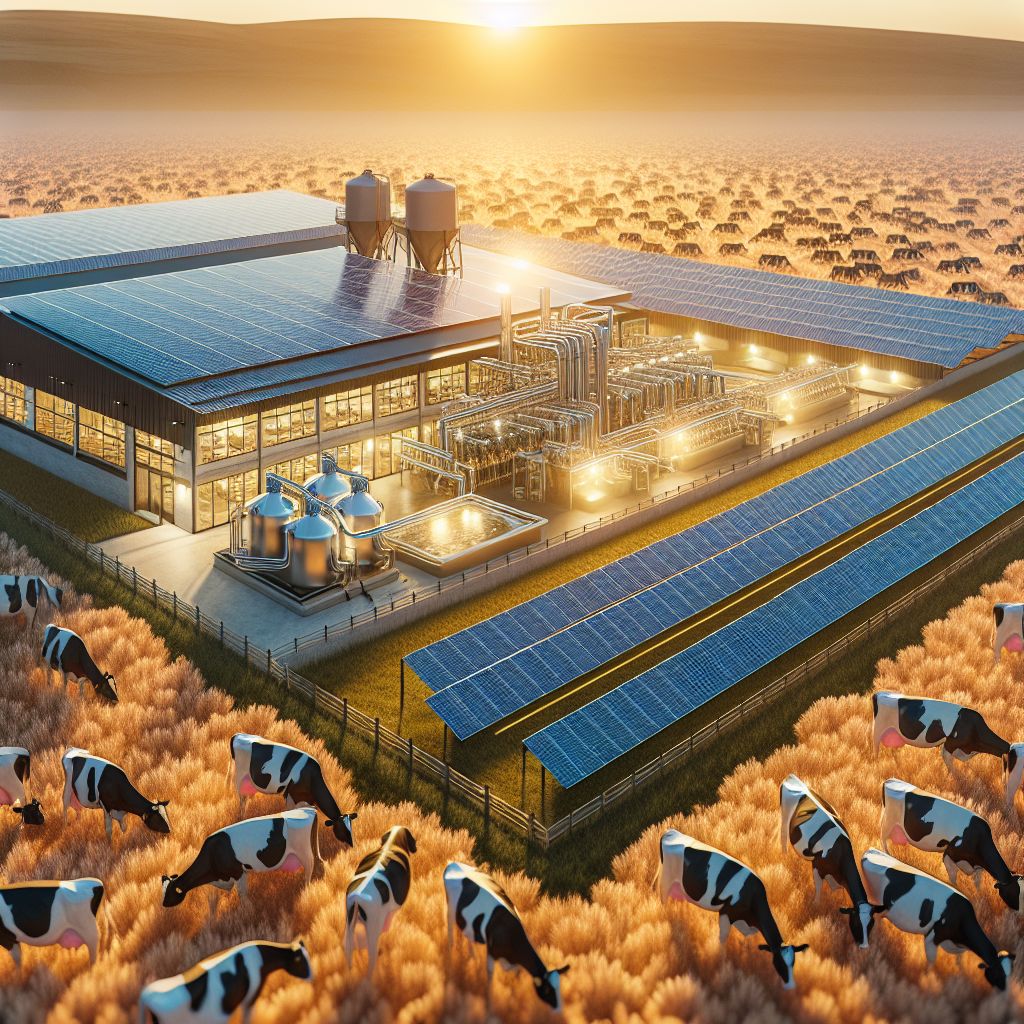
The economic impact of installing solar panels on livestock farms is immediate and long-lasting. By generating electricity on-site, farmers dramatically reduce their reliance on grid power and volatile energy markets. Most livestock operations see a 40-70% reduction in their monthly utility bills after solar installation, creating predictable energy costs that make budgeting significantly easier.
For energy-intensive operations like dairy farms, where milk cooling, vacuum pumps, and automated feeding systems run continuously, the savings are particularly substantial. A typical 100-cow dairy operation consuming 65,000 kWh annually can save approximately $8,000-12,000 per year with an appropriately sized solar array. These savings accelerate the return on investment, often allowing farmers to recoup their initial outlay within 5-8 years.
Additionally, many livestock operations qualify for accelerated depreciation on solar assets, allowing farmers to recover their capital costs more quickly through tax advantages. This financial benefit, combined with operational savings, makes solar an increasingly attractive investment for forward-thinking livestock producers looking to strengthen their business’s long-term viability.
7 Major Benefits of Solar Power for Livestock Farmers
The advantages of solar power for livestock operations extend far beyond simple cost savings. From enhancing animal welfare to improving environmental sustainability, solar installations deliver multiple benefits that address the complex challenges facing modern livestock producers. These combined advantages create a compelling case for integrating solar technology into livestock farming operations of all sizes.
1. Significant Reduction in Electricity Bills
Solar power delivers immediate financial benefits by cutting one of the largest operational expenses for livestock farmers. Modern animal agriculture relies heavily on electricity for lighting, ventilation, feeding systems, and refrigeration. By generating their own power, farmers can slash electricity bills by 40-70% depending on system size and energy consumption patterns. For more insights, read about the benefits of solar power in agriculture.
Case Study: Wilson Family Dairy
System size: 75kW
Annual electricity consumption: 92,000 kWh
Annual savings: $11,200
Payback period: 6.3 years with REAP grant
25-year savings: $392,000 (adjusted for inflation)
The financial impact is particularly significant for operations with high daytime electricity usage that aligns perfectly with peak solar production hours. Dairy farms, for example, often run milking equipment twice daily, with morning milking coinciding with increasing solar output. This natural alignment maximizes the value of solar-generated electricity.
2. Energy Independence During Grid Outages
Power outages can be devastating for livestock operations where ventilation, water pumps, and climate control systems are essential for animal welfare. Solar systems with battery storage provide critical backup power during grid failures, ensuring continuity of essential services. This independence is particularly valuable in rural areas where power restoration may take longer and in regions prone to extreme weather events that threaten grid reliability.
3. Solar-Powered Water Pumping Systems
Water access is fundamental to livestock health and productivity. Solar-powered pumping systems ensure reliable water delivery even in remote pastures without grid connectivity. These systems eliminate the fuel costs and maintenance associated with diesel or gasoline pumps while providing consistent water access that improves animal welfare and grazing distribution across larger pastures.
4. Climate Control in Barns and Animal Housing
Maintaining optimal temperatures in livestock housing is crucial for animal health, comfort, and productivity. Solar power efficiently runs ventilation fans, heating systems, and cooling equipment that create ideal environmental conditions year-round. Modern climate control systems can be programmed to automatically adjust based on temperature, humidity, and air quality readings, ensuring livestock remain comfortable while minimizing energy usage.
The energy demands for climate control fluctuate seasonally, with cooling needs peaking during summer months when solar production is highest. This natural alignment makes solar power particularly effective for managing summer heat stress, which can significantly impact animal productivity and welfare. For operations in hot climates, this benefit alone can justify solar investment through improved animal performance and reduced mortality.
5. Extended Grazing Through Agrivoltaics
Agrivoltaics—the integration of solar energy production with agricultural activities—creates dual-use land that benefits both energy generation and livestock grazing. Panels mounted at sufficient height allow animals to graze underneath while providing valuable shade that reduces heat stress and extends comfortable grazing hours during hot weather. This approach optimizes land use efficiency while improving animal welfare and potentially increasing forage quality beneath panels.
Research shows that strategic panel placement can create microclimates that reduce soil moisture evaporation and promote different forage species growth patterns. In some studies, certain forage varieties showed improved nutritional quality when grown in the partial shade conditions created by solar arrays. The shade benefit is particularly valuable for sheep, goats, and cattle during intense summer heat when traditional open pastures may become too stressful for efficient grazing. To learn more about the benefits of solar power in agriculture, explore further resources.
6. Environmental Benefits and Carbon Footprint Reduction
Livestock operations face increasing pressure to reduce their environmental impact, and solar power offers a concrete way to address these concerns. By replacing fossil fuel-generated electricity with clean solar energy, farmers can substantially reduce their operation’s carbon footprint and demonstrate their commitment to sustainable practices. A 50kW system typically offsets about 70 tons of CO2 annually—equivalent to removing 15 cars from the road.
Beyond carbon reduction, solar installations reduce other environmental impacts associated with conventional energy production, including air pollutants, water usage, and habitat disruption from resource extraction. For farmers marketing directly to consumers or supplying environmentally conscious brands, these environmental credentials can create market advantages and potentially command premium prices for sustainably produced animal products.
7. Increased Property Value of Farm Land
Solar installations represent a capital improvement that enhances farm property values. Unlike equipment that depreciates rapidly, solar systems maintain significant value throughout their 25+ year lifespan while continuously generating energy savings. Agricultural properties with established solar infrastructure typically command higher market values, with studies showing premiums of 3-6% depending on system size and regional factors.
The property value increase is particularly significant for farms with long-term solar land leases or power purchase agreements that guarantee income streams to future owners. These arrangements create predictable revenue that strengthens the overall financial profile of the agricultural property, making it more attractive to potential buyers and potentially easier to finance or refinance.
Choosing the Right Solar System for Your Livestock Farm
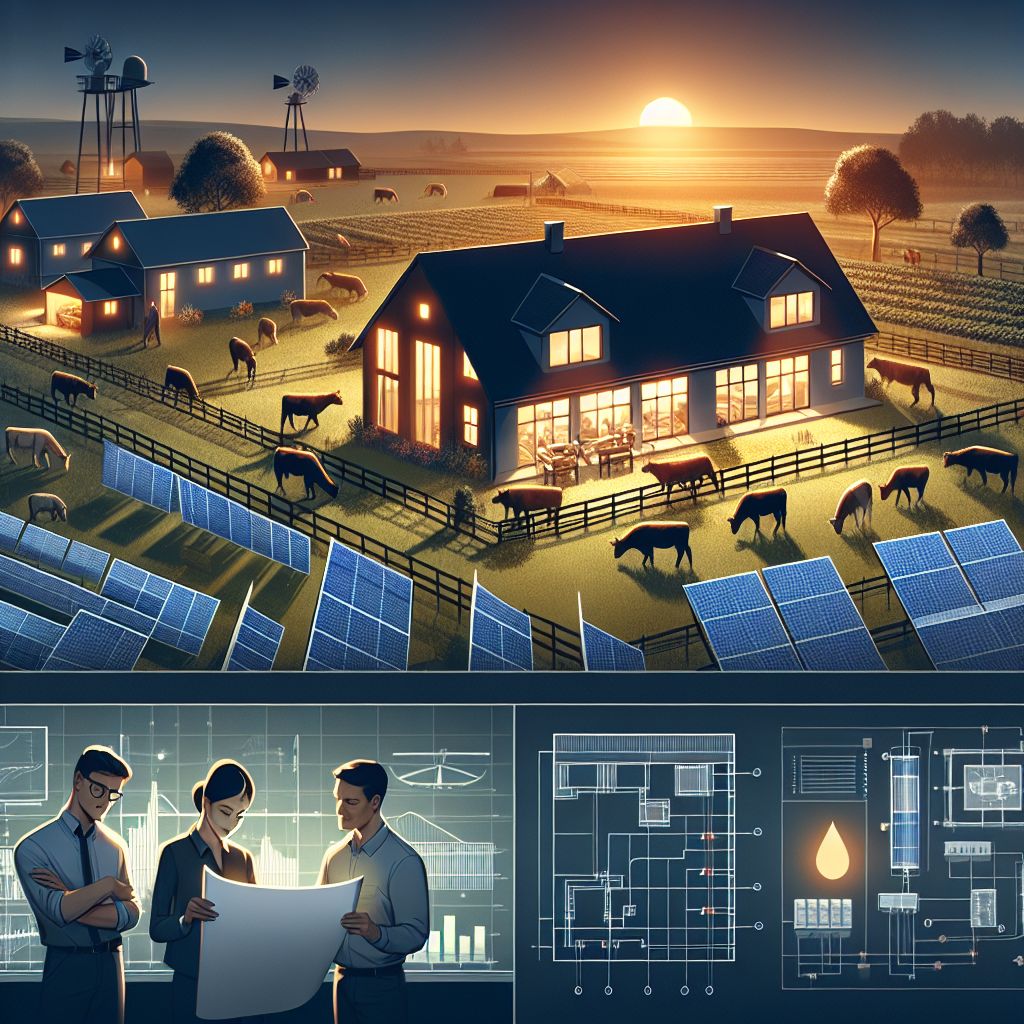
Selecting the optimal solar solution requires careful consideration of your operation’s specific energy needs, physical infrastructure, and financial objectives. The most successful installations begin with thorough assessment and planning rather than simply maximizing panel count. Taking time to evaluate your current and future energy requirements will ensure your investment delivers maximum value throughout its multi-decade lifespan.
Calculating Your Farm’s Energy Needs
Accurate sizing starts with a comprehensive energy audit that identifies consumption patterns throughout your operation. Review 12-24 months of utility bills to understand seasonal variations and identify peak usage periods. Special attention should be paid to large loads like milk cooling systems, feed processing equipment, and ventilation fans that represent significant energy demands.
Future expansion plans should factor into system sizing decisions. If you anticipate adding livestock buildings, increasing herd size, or introducing new equipment within the next five years, consider designing a system that accommodates this growth. Many farmers find it more cost-effective to install a slightly larger system initially than to add capacity later.
Most livestock operations benefit from systems that offset 70-90% of electricity usage rather than aiming for 100% coverage, as this balance typically provides the optimal financial return. Complete energy independence usually requires substantial battery storage that significantly increases project costs and extends payback periods. For more insights on how solar power is transforming agriculture, check out this article on solar power in modern farming.
Grid-Tied vs. Off-Grid Systems for Rural Properties
Grid-tied systems remain connected to utility power while feeding excess solar electricity back to the grid. These installations are typically more cost-effective and simpler to implement for farms with existing utility connections. Net metering arrangements, where available, allow farmers to receive credit for surplus energy production that can offset nighttime or cloudy-day consumption.
Off-grid systems provide complete energy independence but require substantial battery storage capacity to maintain reliable power during nights and low-production periods. While offering protection from utility rate increases and outages, these systems involve higher initial investment and more complex maintenance requirements. They make most sense for remote operations where utility connection costs would be prohibitive or for farmers prioritizing complete energy autonomy.
Hybrid systems offer a middle ground, maintaining grid connection while incorporating battery storage for critical systems. This approach ensures essential equipment remains operational during outages while taking advantage of grid benefits during normal operation. For livestock operations where animal welfare depends on continuous power for ventilation or water access, this balanced approach often represents the optimal solution.
Best Panel Types for Farm Environments
Monocrystalline panels offer the highest efficiency ratings (17-22%) and perform better in partial shade conditions, making them ideal for installations on barn roofs where shadows from trees or other structures might be unavoidable. Though more expensive initially, their superior performance and smaller footprint often justify the investment for space-constrained installations.
Polycrystalline panels provide a more budget-friendly option with slightly lower efficiency (13
-17%) but still deliver reliable performance in farm settings. Their blue-hued cells handle high temperatures well, which can be advantageous in open farmland installations where summer heat can be intense. The cost difference has narrowed in recent years, making the decision less about budget and more about specific site conditions.
Thin-film panels, while less efficient, offer unique advantages for some agricultural applications. Their flexibility allows installation on curved surfaces like grain silos or rounded barn roofs. They also perform better in extreme heat and maintain higher output when partially shaded or soiled—a common occurrence in dusty farm environments. For more information on these benefits, check out flexible thin-film solar panels in agriculture.
Here is a comparative table summarizing the best panel types for farm environments, with key metrics and suitability:
|
Panel Type |
Efficiency (%) |
Key Advantages |
Common Farm Applications |
Cost |
Best For |
Limitations |
|---|---|---|---|---|---|---|
|
Monocrystalline |
17–22 |
Highest efficiency; great in partial shade; withstands varied weather; smaller footprint. 2, 4, 6, 8 |
Barn roofs; space-constrained sites |
High |
Limited roof/land space; high-output needs |
Higher initial cost |
|
Polycrystalline |
13–17 |
Open farmland; areas with abundant sunlight |
Moderate |
Large open areas; budget-conscious projects |
Lower efficiency, larger footprint | |
|
Thin-Film |
10–13 |
Flexible; lightweight; low-cost; works on curved/irregular surfaces; performs in heat & low light/shade. 1, 3 |
Curved barns, grain silos, greenhouses, irrigation |
Lower |
Dusty, hot, or irregular surfaces; agrivoltaics |
Lower efficiency, more panels needed |
Battery Storage Options for Overnight Operations
Lithium-ion batteries dominate the agricultural storage market due to their compact size, high efficiency (95%+), and minimal maintenance requirements. With 10-15 year lifespans and declining costs, these systems are increasingly viable for livestock operations that need reliable power for overnight milking, egg collection, or climate control systems. Their rapid response time makes them particularly valuable for maintaining critical systems during sudden outages.
Lead-acid batteries offer a lower upfront cost option with proven reliability, though they require more maintenance and have shorter lifespans (5-7 years). Their greater sensitivity to temperature extremes necessitates climate-controlled housing in most farm settings. Despite these limitations, they remain cost-effective for smaller operations with basic backup requirements.
Battery System Comparison for Livestock Farms
Lithium-ion: Higher upfront cost, 10-15 year lifespan, minimal maintenance, 95% efficiency
Lead-acid: Lower upfront cost, 5-7 year lifespan, regular maintenance required, 80% efficiency
Flow batteries: Highest upfront cost, 20+ year lifespan, minimal degradation, ideal for large operations
Emerging technologies like flow batteries show promise for larger livestock operations needing extensive storage capacity. Though currently more expensive, their exceptionally long lifespans (20+ years) and ability to provide deep discharge without degradation make them worth considering for large-scale installations planning for long-term operation.
Strategic Panel Placement on Livestock Farms
Thoughtful placement of solar arrays can dramatically impact both energy production and farm operations. The integration of solar infrastructure should enhance rather than hinder daily farming activities while maximizing electricity generation. Taking time to evaluate multiple placement options often reveals opportunities for installations that serve multiple purposes beyond energy production.
Roof-Mounted Systems on Barns and Outbuildings
Barn roofs typically offer ideal solar positioning with their large, unobstructed surfaces that don’t consume valuable grazing or cropland. South-facing roof sections (or north-facing in the Southern Hemisphere) with 15-40 degree pitches provide optimal year-round production without requiring additional mounting structures. Modern mounting systems designed specifically for metal agricultural buildings allow secure installation without compromising roof integrity or warranties. To learn more about the integration of solar panels in agriculture, explore agrivoltaics and its benefits.
When evaluating roof mounting, consider the age and structural capacity of existing buildings. Older barns may require engineering assessment or reinforcement before supporting the additional 3-5 pounds per square foot that solar arrays typically add. Additionally, roof access for maintenance and proximity to electrical interconnection points should factor into placement decisions.
Ground-Mount Options for Grazing Areas
Ground-mounted systems offer flexibility in orientation and angle that can optimize energy production regardless of existing building positions. These installations can be strategically placed to create shade zones for livestock during hot weather while still allowing adequate airflow beneath and between panel rows. Elevating arrays to 8-10 feet minimum clearance allows farm equipment to pass underneath while providing generous grazing space.
Fencing considerations become important with ground-mounted systems in livestock areas. Options range from excluding animals entirely with perimeter fencing to designing robust mounting systems that withstand animal contact. Sheep and certain cattle breeds have proven compatible with solar arrays when panels are mounted at appropriate heights and wiring is properly protected.
Dual-Use Installations That Allow Animal Access
Purpose-designed agrivoltaic systems represent the cutting edge of farm solar integration. These installations specifically account for animal movement patterns, grazing behaviors, and shade preferences. Panel rows spaced more generously than in conventional installations allow for improved forage growth and easier livestock movement, while still maintaining profitable energy production.
Mounting heights for livestock-accessible installations should be determined based on the specific animals present. Sheep typically require minimum clearances of 3-4 feet, while cattle need at least 7-8 feet to prevent panel damage. Some farmers report additional benefits from these systems, including reduced water consumption for pastures partially shaded by panels and extended grazing seasons in hot climates.
5 Solar-Powered Solutions for Specific Livestock Needs
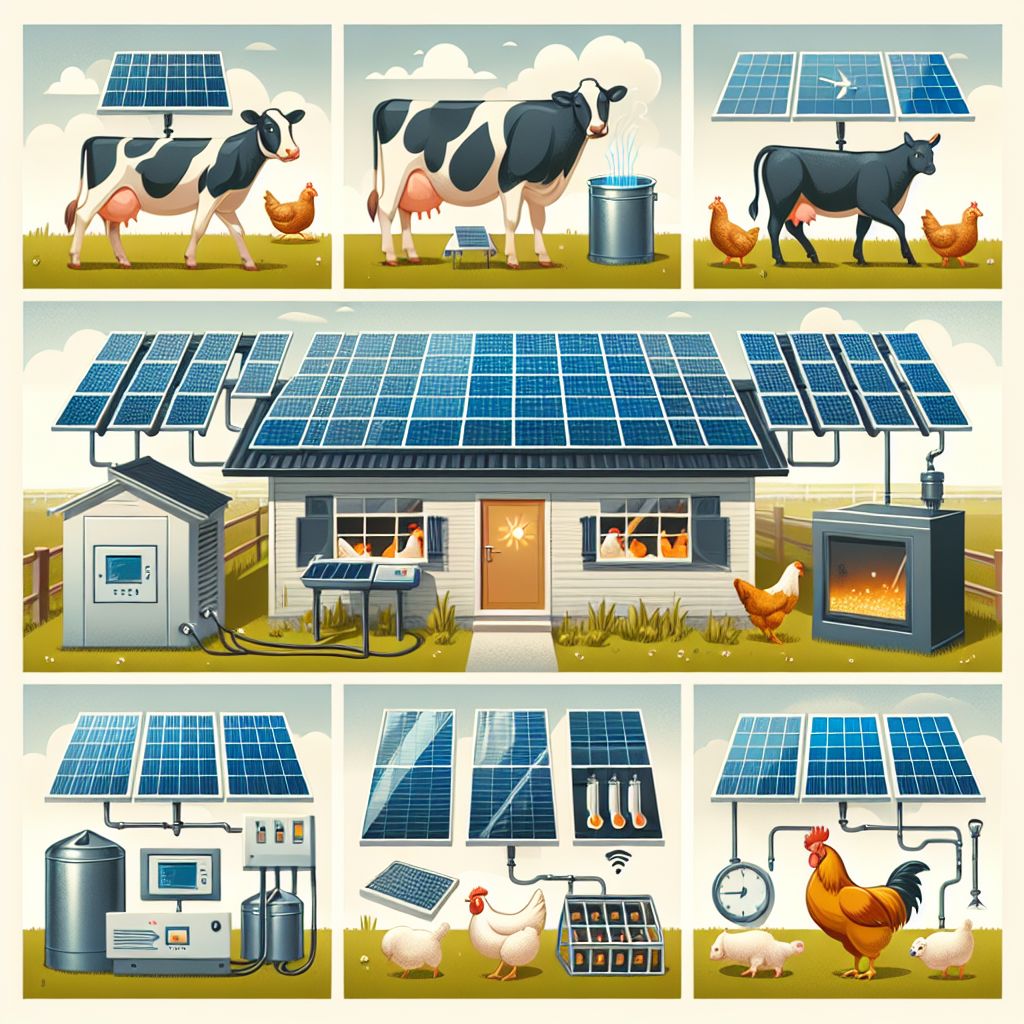
Beyond general electricity generation, targeted solar applications can address specific operational challenges unique to different livestock sectors. These purpose-designed systems often deliver faster returns on investment by solving particular pain points while reducing energy costs.
1. Ventilation Systems for Poultry Houses
Modern poultry operations depend on precise climate control to maintain bird health and productivity. Solar-powered ventilation systems can substantially reduce the substantial electricity costs associated with continuous fan operation. Smart controllers can adjust fan speed based on temperature, humidity, and air quality readings, optimizing both energy use and bird comfort.
By aligning high ventilation needs during summer months with peak solar production, poultry producers can significantly offset their largest energy expense. Adding battery backup ensures continuous ventilation during grid outages—a critical safeguard against catastrophic heat-related bird mortality during power failures. For operations with multiple houses, phased implementation allows farmers to test system performance before full-scale deployment.
2. Milking Parlor Energy Requirements
Dairy operations face unique energy challenges with their twice-daily milking schedules and milk cooling requirements. Solar systems can be specifically sized and timed to support morning and afternoon milking energy spikes, with battery storage bridging generation gaps. Vacuum pumps, milk cooling systems, and parlor lighting represent significant loads that directly impact milk quality and production efficiency. For more information on how solar power can benefit agriculture, check out this article on solar power advantages for agriculture.
Heat recovery systems paired with solar electric production offer additional efficiency by capturing waste heat from milk cooling processes for water heating. This integrated approach addresses multiple energy needs simultaneously, improving overall farm sustainability. Some dairy operations have achieved 60-80% reduction in conventional energy use through comprehensive solar integration strategies.
3. Electric Fencing and Security Lighting
Remote pastures and grazing lands often lack grid connectivity, making solar the ideal power source for electric fencing and security lighting. Small, dedicated solar systems can maintain consistent fence charging regardless of location, enabling rotational grazing practices in areas previously unsuitable for livestock containment. These systems typically incorporate battery storage to maintain fence integrity overnight and during cloudy periods.
Security lighting powered by solar-charged batteries provides protection against predators and theft while illuminating critical work areas during early morning or evening livestock checks. Motion-activated systems conserve stored energy while still providing illumination when needed. The modest investment in these targeted systems often pays for itself rapidly through improved grazing management and reduced predation losses.
4. Feed Processing Equipment
Feed grinding, mixing, and distribution systems represent significant but intermittent energy loads that align well with daytime solar production. By scheduling energy-intensive feed processing during peak solar generation hours, farmers can maximize self-consumption of generated electricity. Automated systems can be programmed to operate when solar production exceeds other farm loads, effectively using excess generation that might otherwise be exported to the grid.
For operations producing their own feed, solar-powered drying systems can reduce moisture content and prevent spoilage without fossil fuel consumption. These systems improve feed quality and storage life while reducing the risk of mold development that could impact animal health. The combined benefits of improved feed quality and reduced energy costs create compelling economics for these specialized applications.
5. Refrigeration for Dairy and Meat Products
Maintaining cold chain integrity is essential for farms engaged in direct marketing of meat, eggs, or dairy products. Solar-powered refrigeration ensures consistent temperature control even in remote locations or during grid outages. Modern DC refrigeration systems designed specifically for solar applications offer greater efficiency than conventional AC units, requiring smaller solar arrays and less battery capacity.
Ice bank milk cooling systems pair particularly well with solar power by using excess daytime solar production to build cold thermal storage that can then cool fresh milk during evening milking. This approach effectively “stores” solar energy in the form of ice, addressing the misalignment between afternoon solar peaks and evening cooling needs. The technology reduces both peak power demands and total energy consumption while improving milk quality.
Financial Incentives That Make Solar Affordable for Farmers
The economics of agricultural solar have improved dramatically through various incentive programs specifically designed for farm operations. Understanding and leveraging these financial tools can transform marginally viable projects into compelling investments with rapid payback periods. Assistance with navigating these complex programs is available through agricultural extension services, solar developers, and specialized grant writers familiar with farm energy programs.
USDA REAP Grants and Loan Guarantees
The Rural Energy for America Program (REAP) represents one of the most valuable funding sources for livestock producers considering solar investments. These grants can cover up to 25% of eligible project costs, with maximum awards of $500,000 for renewable energy systems. Smaller operations often find the simplified application process for grants under $20,000 particularly accessible, with higher approval rates than larger requests.
In addition to grants, REAP offers loan guarantees up to 75% of project costs, enabling farmers to secure favorable financing terms even with limited credit history or collateral. Combined grant and loan guarantee packages can dramatically improve project economics while reducing farmer risk exposure. For more insights on how solar power is transforming modern farming, application deadlines typically fall twice annually, with state-specific allocation pools that may offer better odds in less populous rural areas.
Federal Tax Credits for Agricultural Solar
The Investment Tax Credit (ITC) allows farmers to deduct a substantial percentage of solar system costs from their federal tax liability. Currently set at 30% through 2032, this credit significantly improves project economics for operations with sufficient tax appetite. For farmers without enough tax liability to fully utilize the credit in a single year, the ITC can be carried forward to future tax years, preserving its value. To understand more about how solar power benefits agricultural operations, explore the advantages of solar power in agriculture.
Accelerated depreciation through bonus depreciation or Modified Accelerated Cost Recovery System (MACRS) provides additional tax benefits by allowing farmers to deduct a larger portion of system costs in early years. This front-loading of tax benefits improves cash flow during the crucial payback period. When combined with the ITC, these tax incentives can effectively reduce net system costs by 50% or more for qualifying operations.
State-Specific Incentives for Farm Energy Projects
Many states offer agricultural solar incentives that complement federal programs, creating powerful financial stacking opportunities. These incentives take various forms including performance-based payments, rebates, tax exemptions, and specialized loan programs with below-market interest rates. Some states have created carve-outs specifically for agricultural producers within their renewable energy programs, reducing competition for limited funding.
State agricultural departments often administer grant programs distinct from energy office incentives, creating multiple potential funding sources for a single project. Working lands preservation programs, conservation initiatives, and water quality improvement funds may support solar projects that demonstrate multiple environmental benefits beyond clean energy production.
|
State |
Program Name |
Incentive Type |
Maximum Benefit |
Special Farm Provisions |
|---|---|---|---|---|
|
New York |
NY-Sun PV Incentive |
Rebate |
$525,000 |
Additional funding for dairy operations |
|
California |
SGIP Program |
Rebate |
$1,000,000 |
Higher rates for systems with battery storage |
|
Minnesota |
Rural Finance Authority |
Low-interest loan |
$250,000 |
Specific livestock operation category |
|
Oregon |
REAP Assistance |
Grant |
$100,000 |
Application assistance for livestock farms |
|
Vermont |
CEDF Grant |
Grant |
$125,000 |
Priority for dairy operations |
Local utility programs frequently offer additional incentives, particularly in rural electric cooperative territories seeking to support agricultural customers. These may include higher net metering rates, interconnection cost sharing, or special agricultural rates for solar-equipped farms. Developing relationships with utility representatives early in the planning process can reveal opportunities not widely advertised.
Calculating Your Return on Investment Timeline
A comprehensive ROI analysis should incorporate all available incentives, projected energy cost increases, maintenance requirements, and potential revenue from renewable energy credits where applicable. Most livestock operations achieve payback periods between 5-8 years depending on system design, local electricity costs, and available incentives. After the payback period, systems typically generate 15-20 years of nearly free electricity, creating substantial long-term value.
Maintenance Tips to Maximize Solar Panel Lifespan on Farms
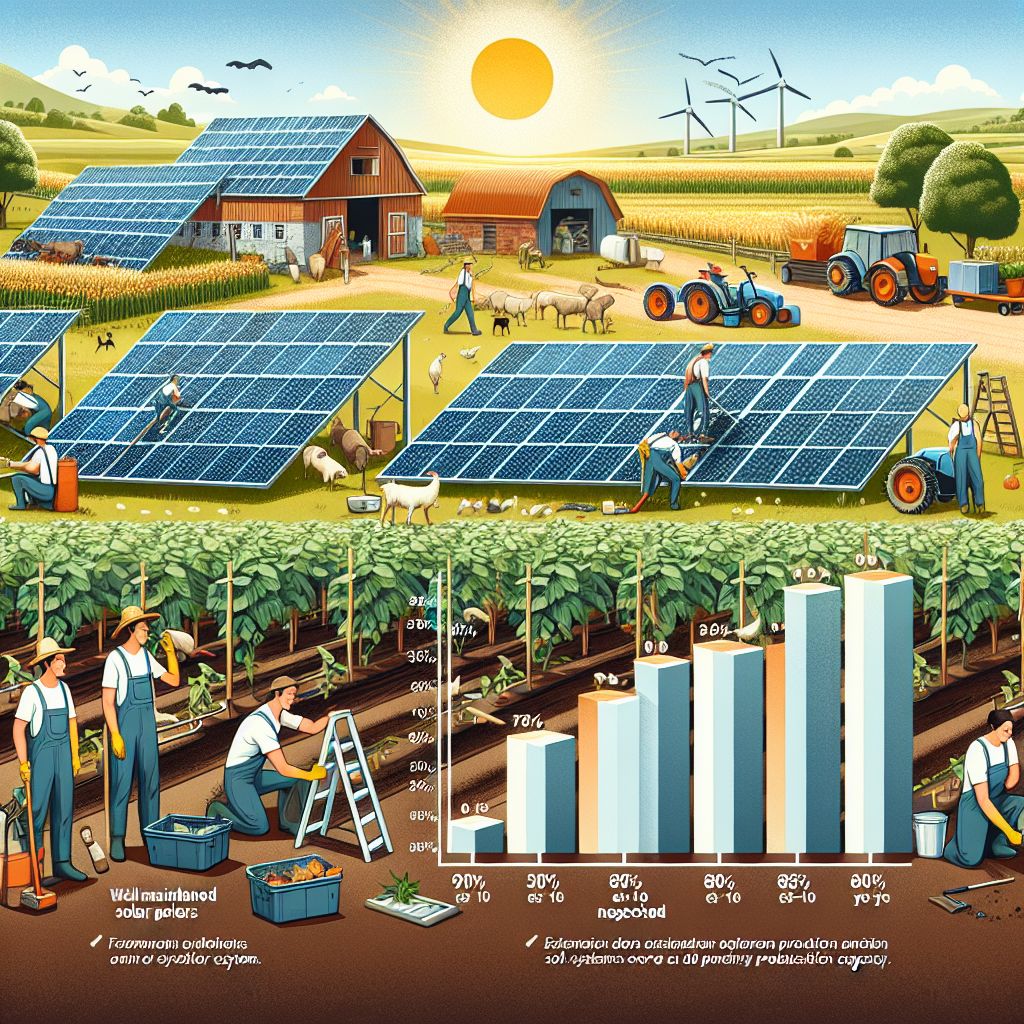
Agricultural environments present unique maintenance challenges for solar equipment, from dust accumulation to potential animal interaction. Establishing proper maintenance protocols ensures systems deliver maximum energy production throughout their 25+ year expected lifespan. Most maintenance tasks can be performed by farm staff with minimal training, though annual professional inspections remain recommended. For more information on how solar power is transforming modern farming, check out this resource.
Preventative maintenance delivers substantial returns through improved system output and extended equipment life. Studies indicate that well-maintained agricultural solar systems maintain approximately 95% of their original production capacity after 20 years, compared to just 80-85% for neglected installations. This production difference significantly impacts lifetime system economics and justifies regular maintenance investment.
Keeping Panels Clean in Dusty Farm Environments
Agricultural operations generate considerable dust from field work, livestock movement, and feed processing that can accumulate on panel surfaces and reduce efficiency. Regular cleaning maintains optimal light transmission, with most farms benefiting from quarterly cleanings supplemented by additional attention during particularly dusty periods. Simple water rinses during early morning hours when panels are cool often suffice, though stubborn accumulations may require soft brushes and mild, non-abrasive cleaners.
Protecting Equipment from Livestock Damage
Livestock curiosity can lead to damaged equipment when animals access solar array areas. Ground-mounted systems should incorporate sturdy fencing or elevated designs that prevent animals from reaching sensitive components. Cable runs require conduit protection against chewing, and mounting hardware should be secured against rubbing or scratching behaviors. For systems intentionally co-located with grazing animals, regular inspections should check for signs of animal interference or damage. For more insights on how solar power benefits agriculture, explore our detailed article.
Seasonal Maintenance Schedule
Developing a seasonal maintenance calendar helps ensure consistent system care throughout the year. Spring inspections should focus on winter damage repair, cleaning accumulated grime, and checking for nesting animals. Summer maintenance centers on ventilation and cooling system verification, especially for inverters and battery systems that may struggle during peak temperatures. Fall preparation includes clearing debris that could hold moisture and checking support structures before winter weather arrives, while winter monitoring focuses on snow removal when accumulation exceeds 2-3 inches on panels.
Documentation of maintenance activities creates valuable records for warranty claims, insurance purposes, and eventual system transfer during property sales. Simple maintenance logs tracking cleaning dates, production readings, and equipment inspections require minimal time investment while providing significant long-term benefits. Many modern monitoring systems can automatically flag performance decreases that might indicate maintenance needs, allowing targeted rather than calendar-based interventions.
Real-World Success: How Farmers Are Powering Their Operations with Solar
Across the country, innovative livestock producers are demonstrating the transformative potential of solar energy integration. The Berrybrook Farm dairy operation in Wisconsin installed a 76kW system that powers their milking parlor and milk cooling equipment, reducing electricity costs by 62% while improving their sustainability messaging to premium organic milk buyers. Their seven-year payback period was shortened to just over four years through strategic use of REAP grants and accelerated depreciation, creating compelling economics that have inspired neighboring farms to pursue similar projects.
Solar-Powered Future: Why Livestock Farmers Can’t Afford to Wait
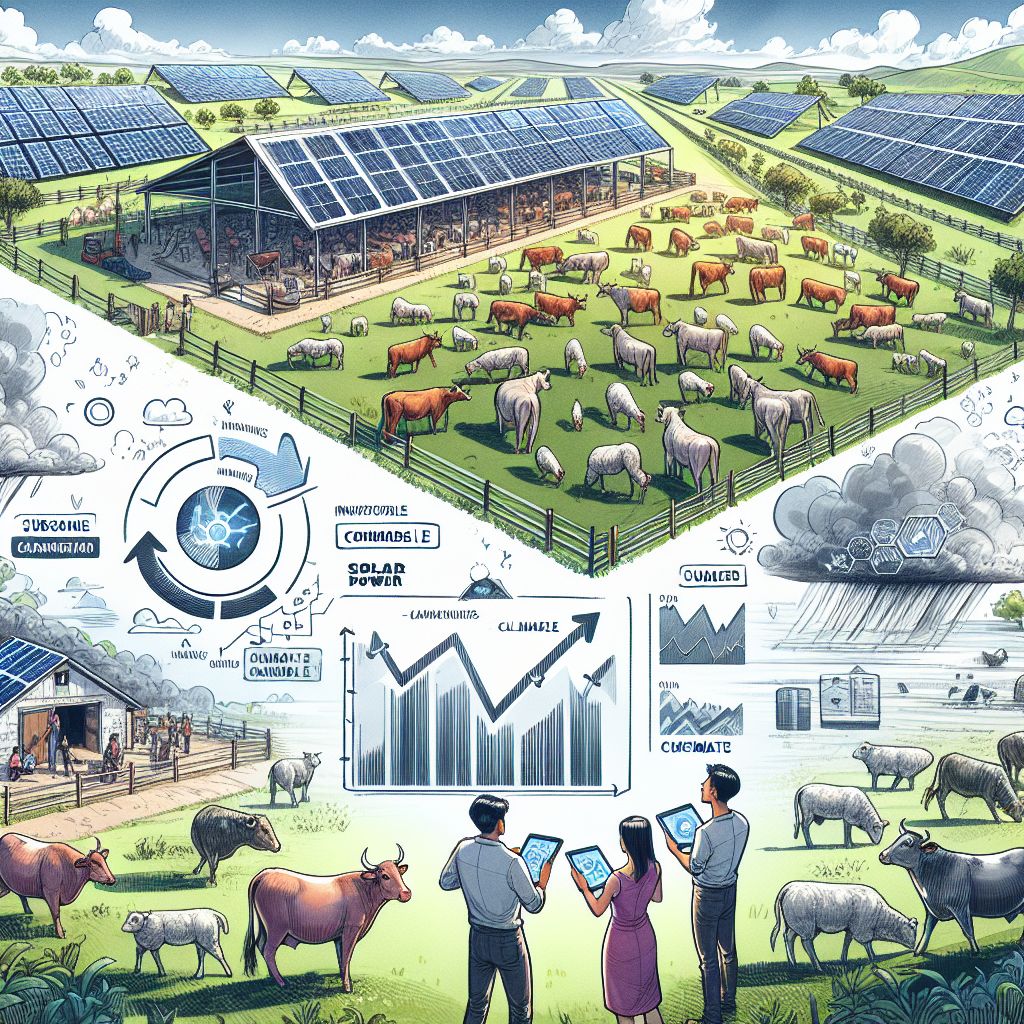
The convergence of falling solar costs, rising electricity rates, and climate volatility creates a compelling case for immediate solar adoption in the livestock sector. Farmers who implement solar solutions now position themselves advantageously against coming challenges while securing decades of price-stable energy. The multi-year process of planning, funding, and installing comprehensive solar systems means that delaying decisions can postpone benefits and potentially miss current incentive windows.
- Increasing weather extremes threaten grid reliability precisely when livestock operations most need climate control
- Current federal tax credits are scheduled to decrease after 2032
- Equipment prices have stabilized after post-pandemic supply chain disruptions
- Rising interest rates make financing more expensive with each delay
- Early adopters gain competitive advantages through reduced operational costs
Beyond economic considerations, solar adoption aligns livestock operations with emerging consumer preferences for sustainably produced animal products. Market research shows growing willingness to pay premiums for products with verifiable environmental benefits, creating marketing advantages for solar-powered operations. Several certifying organizations now recognize on-farm renewable energy in their sustainability metrics, providing third-party validation that resonates with environmentally conscious consumers.
The transformation toward solar-powered livestock production represents not merely an energy decision but a strategic positioning for future agricultural viability. By embracing this technology now, forward-thinking producers secure both immediate benefits and long-term competitive advantages in an increasingly resource-constrained and climate-conscious marketplace. For most operations, the question is no longer whether solar makes sense, but rather how quickly and comprehensively it can be implemented.
Frequently Asked Questions
As livestock producers explore solar options, certain questions consistently arise during the planning process. Addressing these common concerns helps farmers develop realistic expectations and make informed decisions about system design, financing, and implementation timelines. The following responses reflect both industry best practices and real-world experiences from successful agricultural installations.
How long does it take to recoup the investment in solar panels for a livestock farm?
Most livestock operations achieve payback periods between 5-8 years depending on electricity costs, available incentives, and system design. Dairy farms typically see faster returns due to their high, consistent energy usage that aligns well with solar production patterns. Operations that qualify for USDA REAP grants can reduce payback periods by 1-3 years, while those incorporating battery storage may see slightly longer timelines offset by greater energy resilience. After this initial period, systems typically deliver 15-20 additional years of nearly free electricity, creating substantial long-term value.
Can solar panels withstand extreme weather conditions common in farming areas?
Modern agricultural solar installations are engineered to withstand challenging farm environments, including high winds, hail, snow loads, and temperature extremes. Quality panels undergo rigorous testing and certification for wind resistance (typically 140+ mph) and impact resistance from hail up to 1 inch in diameter. Mounting systems designed specifically for agricultural buildings provide additional structural integrity, while ground-mounted systems incorporate wind-resistant designs learned from utility-scale installations.
Insurance coverage for weather damage is typically available through either specialized renewable energy policies or as additions to existing farm insurance packages. Most manufacturers provide warranties of 25+ years for panels and 10-15 years for inverters, with performance guarantees ensuring minimal degradation over time. The most vulnerable system components are typically housed in weather-resistant enclosures with appropriate ventilation and temperature management features.
Do I need to completely replace my current energy system when installing solar?
Solar installations typically complement rather than replace existing electrical systems, with most livestock operations maintaining grid connections for nighttime use and backup capacity. This grid-tied approach eliminates the need for extensive battery storage while still delivering substantial cost savings. Systems can be sized to offset anywhere from 25-100% of electricity usage depending on budget, available space, and energy consumption patterns, allowing phased implementation that aligns with financial resources.
How do solar panels affect grazing animals and their behavior?
Research and practical experience demonstrate largely positive interactions between livestock and properly designed solar installations. Grazing animals naturally seek shade during hot weather, making solar arrays attractive shelter areas that can reduce heat stress and improve grazing distribution across pastures. Studies show sheep readily graze vegetation beneath and between panel rows, while certain cattle breeds demonstrate compatible grazing patterns when panels are mounted at sufficient heights (minimum 7-8 feet clearance).
Behavioral observations indicate animals often prefer partially shaded grazing areas during summer months, with improved weight gain and reduced water consumption reported in some dual-use systems. Panel arrays create beneficial microclimates with reduced temperature extremes and improved soil moisture retention that can enhance forage quality and availability, particularly during drought conditions. Proper design considerations include adequate spacing between panel rows, appropriate mounting heights, protected wiring, and strategic water placement to encourage uniform grazing patterns.
What size solar system would a typical dairy farm with 100 cows require?
A 100-cow dairy operation typically requires a 30-50kW system to offset a significant portion of its electricity usage. Milking operations with twice-daily milking schedules, milk cooling systems, vacuum pumps, and ventilation typically consume 60,000-90,000 kWh annually, though this varies considerably based on equipment efficiency and operational practices. Detailed electricity usage analysis through utility bill review and ideally load monitoring provides the foundation for accurate system sizing.
System design should consider not just total energy consumption but also load timing and seasonal variations. Operations with significant summer cooling loads align particularly well with solar production curves, potentially allowing smaller systems to offset a larger percentage of costs. For comprehensive planning, farmers should evaluate both current usage patterns and anticipated future needs, including potential electrification of processes currently powered by fossil fuels. To explore more about solar power applications in agriculture, check out solar power benefits for livestock farmers.
For livestock operations seeking to maximize their sustainability and energy independence, solar power represents an increasingly accessible and economically compelling solution. By carefully assessing needs, leveraging available incentives, and implementing appropriate maintenance practices, farmers can transform their energy expenses into valuable assets that deliver benefits for decades to come. For a personalized assessment of your operation’s solar potential, LightsourceBP’s agricultural energy specialists can help develop tailored solutions that address your specific production requirements and sustainability goals.
Solar panels are becoming an increasingly popular choice for livestock farmers looking to reduce energy costs and promote sustainability. These panels can be used to power various farm operations, from lighting to heating systems. By harnessing solar energy, farmers can decrease their reliance on traditional power sources, thus reducing their carbon footprint. For more information on the benefits of solar power in agriculture, farmers can explore the various advantages that come with integrating this renewable energy source into their operations.







Leave a Reply